
Enhancing Your Vision
Guiding you toward the procedure that fits your unique needs, so you can see the world clearly and confidently.

Published: 12 Oct 2026
Most people don't find out their vision has changed until their yearly eye exam catches it. Dr. Ilan Cohen, a cataract and premium lens surgeon in the New York area with 25 years of experience, sees the pattern constantly: patients walk in convinced their vision is "fine," and then testing in the office tells a very different story.
The reason is simple. Cataracts don't show up overnight — they creep in gradually, and the brain quietly adapts along the way. That means someone can lose real quality of vision for months or years before they consciously register it. By the time it's noticed, it may already be affecting night driving, stairs, faces, or fine print.
Below is a set of quick, informal screening checks Dr. Cohen walks through — tests for clarity, glare, color, contrast, and night vision that take just a few minutes with a phone. These aren't a diagnosis. They're a way to catch a signal early enough to act on it.
Before trying any of these, it's important to know when not to self-test. Skip home testing and seek urgent care if you experience:
These symptoms can point to retina problems, bleeding, inflammation, or optic nerve issues — serious causes of vision loss that are unrelated to cataracts. Cataracts, by contrast, are almost always gradual and painless.
With those in place, here are the six checks.
Pick a distance target you look at often — a clock across the room, a street sign out the window, the score bar on the TV. Look with both eyes and ask: is this as crisp as I remember, or has it softened? Then cover the left eye and look with the right only, and switch.
What matters here isn't just blur — it's the character of the blur. Cataracts often create a film-like or foggy quality rather than simple out-of-focus softness. A clear difference between the two eyes is meaningful, since cataracts frequently progress unevenly.
This is one of the most important safety-related checks. In a dark room, turn on your phone's flashlight and place it a few feet away. Look at it with both eyes, then cover one and compare, then switch.
Ask:
A noticeably worse result in one eye is a classic cataract pattern. The explanation is straightforward: the eye's lens works like a camera lens, and a cataract clouds or yellows it. That cloudiness scatters incoming light — and scattered light is what shows up as glare.
Pull up a plain white screen — a blank note or a blank webpage works fine. Hold it at a comfortable distance, look with both eyes, then compare eye by eye.
Ask whether the white looks equally white and equally bright in both eyes. If one eye renders it more beige, more yellow, or noticeably dimmer, that's worth paying attention to. Cataracts often yellow the lens gradually, acting like a built-in tinted filter that goes unnoticed until the two eyes are compared directly.
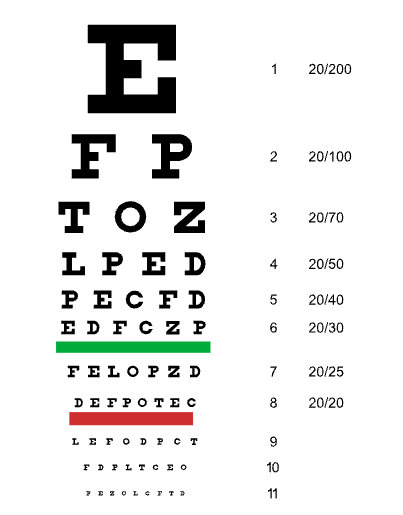
Using a reading chart or any printed text at a normal reading distance (with reading glasses if you normally use them), read with both eyes, then one eye at a time.
Two things matter here: which eye can comfortably read smaller lines, and whether one eye makes letters look faded, ghosted, or washed out even when the size is large enough to read easily. Cataracts affect vision quality, not just sharpness.
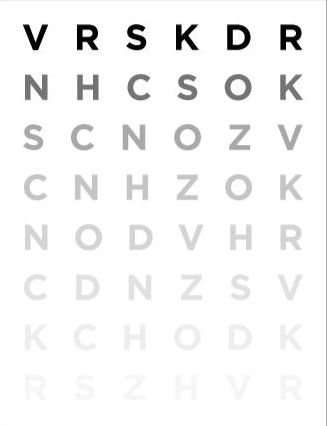
Contrast sensitivity is one of the first visual functions cataracts affect. Using a low-contrast reading chart at normal reading distance, read across each line as far as possible — both eyes together, then each eye separately.
Watch for where the letters stop looking solid and start fading into the background. If one eye loses the faint letters much earlier than the other, that's a red flag worth noting. Contrast sensitivity isn't an abstract measurement — it's the visual skill behind reading stairs and curbs, recognizing faces in dim light, and driving safely at night. When contrast drops, fall risk rises.
At night, look out a window at distant lights — streetlights, building lights, headlights. Look with both eyes, then each eye separately, and ask:
If the honest answer to that last question is no, that's a strong signal to schedule an exam sooner rather than later.
If both eyes perform similarly and nothing stands out, that's reassuring — though regular eye care still matters, since cataracts are only one part of overall eye health.
If one eye is clearly worse on two or more of these tests, don't wait for the next annual exam. When you do go in, describe the functional symptoms specifically: glare, halos, night driving difficulty, needing more light, dull colors, fading contrast. Those details matter, because a proper evaluation isn't just about what a chart shows in a bright exam room — it's about how someone actually functions in daily life.
These tests aren't a substitute for a comprehensive eye exam, but they're a fast, honest way to catch early warning signs that often go unnoticed for months or years. If cataracts turn out to be part of the picture, the goal isn't just to put a label on it — it's to protect safety, independence, and quality of life going forward.
Curious about what treatment looks like if a cataract is confirmed? Learn more about the differences between laser and blade cataract surgery, or schedule a consultation with Cohen Eye Institute for personalized guidance based on your eyes and your goals.
Guiding you toward the procedure that fits your unique needs, so you can see the world clearly and confidently.




If you do not see your preferred date and time please call the office, so we can accommodate your request (917) 398-4011.