
Enhancing Your Vision
Guiding you toward the procedure that fits your unique needs, so you can see the world clearly and confidently.

Published: 15 Sep 2026
You’ve been told to wait for the “perfect” 2026 cataract lens. But what if waiting means worse vision or fewer options?
In my Manhattan and New York City practice, many patients ask exactly that question.
If you’re considering cataract surgery or lens replacement and want to know what’s coming in 2026, this guide is for you. I’ll explain what these new lenses are, who they're best for, and whether it makes sense to wait—or move forward now.
I’m Dr. Ilan Cohen, a board-certified cataract and premium lens surgeon with 25 years of experience and tens of thousands of procedures. You can read more here. I have no financial interest in the companies mentioned.
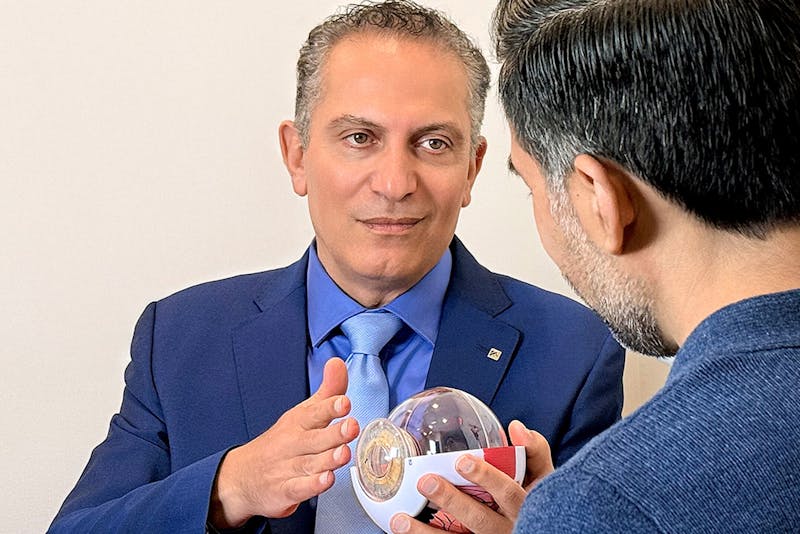
A cataract is clouding of your eye’s natural lens. During surgery, we replace that cloudy lens with an intraocular lens (IOL). Unlike your natural lens, an IOL does not flex, which means the optics you choose will determine how you see after surgery.
Refresher on cataract timing: When Is the Right Time?

Below are the lenses patients ask me about most — what they are, why I use them, and the trade-offs.
Strong distance and intermediate with monofocal-like night comfort. May still need readers for tiny print.
Improved clarity and lower scatter vs. older PanOptix. Excellent full-range vision.
Excellent distance; may show early halos that fade over time.
Back on market post-recall; excellent real-world range with low halo incidence.
Coming 2026. Strong distance/intermediate and monofocal-like contrast.
Near/trifocal-like results without rings (early data).
More near vision than typical EDOF; some halo risk.
FDA approved Sept 2025; very high spectacle independence in trials.
Strong distance/intermediate with very low halo profile.
Non-diffractive design aiming for trifocal-like range with fewer halos.

For more background:
The Latest Advances in Cataract Surgery
Game-Changing Lenses for 2025
If you’re deciding between laser assisted and traditional blade surgery, start here.
Whether you want low halos or full reading freedom, we’ll map your goals to a personalized plan. When you're ready, schedule a consultation.
Guiding you toward the procedure that fits your unique needs, so you can see the world clearly and confidently.



If you do not see your preferred date and time please call the office, so we can accommodate your request (917) 398-4011.